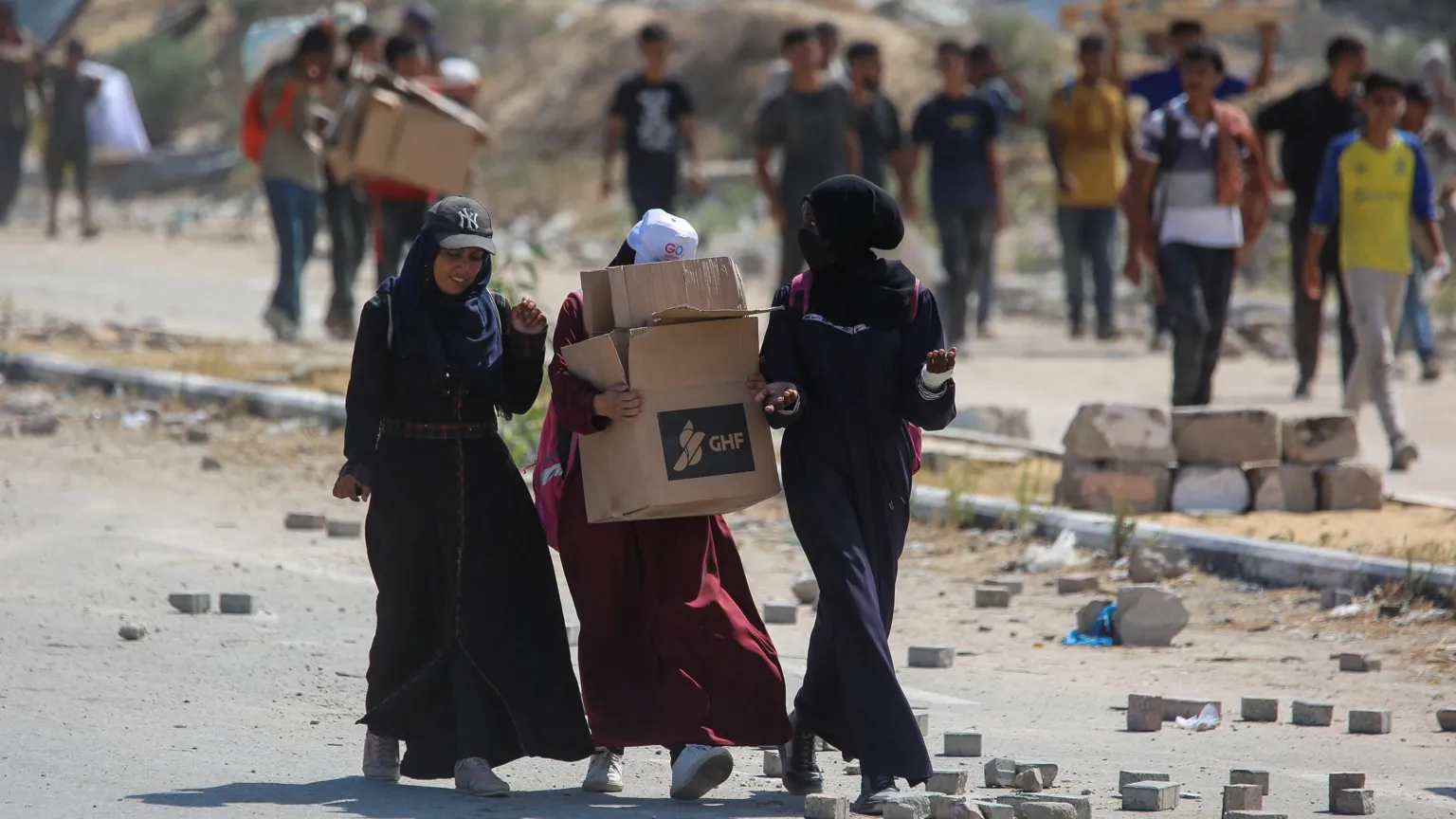
The US and Israel-backed Gaza Humanitarian Foundation (GHF) has announced it is closing its operations in Gaza, six months after launching emergency aid efforts in the conflict-stricken territory. The organisation had already suspended its three food distribution points following a ceasefire between Hamas and Israel six weeks ago.
GHF had aimed to deliver aid directly to Palestinians, bypassing the United Nations, but UN agencies and other aid groups refused to cooperate, calling the system unsafe and unethical.
Hundreds of Palestinians were killed while trying to access food near GHF’s sites, with the UN attributing most deaths to Israeli fire. Israel said its forces were firing warning shots at people who approached troops in a “threatening” manner.
On Monday, GHF said it was ending operations after what it described as the "successful completion of its emergency mission," reporting that it had distributed three million aid packages, equivalent to over 187 million meals. Jon Acree, the foundation’s executive director, added that the US-led Civil-Military Coordination Centre (CMCC), created to support President Donald Trump’s Gaza peace plan, would "adopt and expand the model GHF piloted."
US State Department spokesperson Tommy Piggott praised GHF’s approach on X, saying, "GHF's model, in which Hamas could no longer loot and profit from stealing aid, played a huge role in getting Hamas to the table and achieving a ceasefire."
Hamas, which has consistently denied claims of stealing aid, welcomed the closure of GHF but also called for accountability.
Hazem Qassem, a Hamas spokesperson, wrote on Telegram, "We call upon all international human rights organisations to ensure that it does not escape accountability after causing the death and injury of thousands of Gazans and covering up the starvation policy practised by the (Israeli) government."
GHF began distributing aid on 26 May, shortly after Israel eased a partial blockade that had lasted 11 weeks and caused severe shortages of food and other essentials.
By three months later, Gaza City was officially declared to be facing famine. The foundation’s food sites, located in Israeli military zones in southern and central Gaza, were operated by US private security contractors.
The UN and its partners criticized the foundation’s operations for violating core humanitarian principles of neutrality, impartiality, and independence. The UN warned that directing vulnerable people into militarized areas was inherently unsafe.
According to the UN human rights office, at least 859 Palestinians seeking food near GHF sites were killed between 26 May and 31 July, with another 514 killed near UN and other aid convoys. The majority of these deaths were caused by Israeli forces, the office said.
GHF disputed the UN figures, claiming there were no shootings at its sites and accusing the UN of using "false and misleading" statistics provided by Gaza’s Hamas-run health ministry.
Since the ceasefire, GHF said future aid efforts would continue "without interference from the two parties through the United Nations and its agencies, and the Red Crescent, in addition to other international institutions not associated in any manner" with Hamas or Israel.
UN spokesperson Stephane Dujarric said the foundation’s closure would have "no impact" on its operations because the UN "never worked with them." He added that while aid deliveries have increased since the ceasefire on 10 October, the assistance remains insufficient for Gaza’s 2.1 million residents.































Comments
Sign in with Google to comment, reply, and like comments.
Continue with Google